
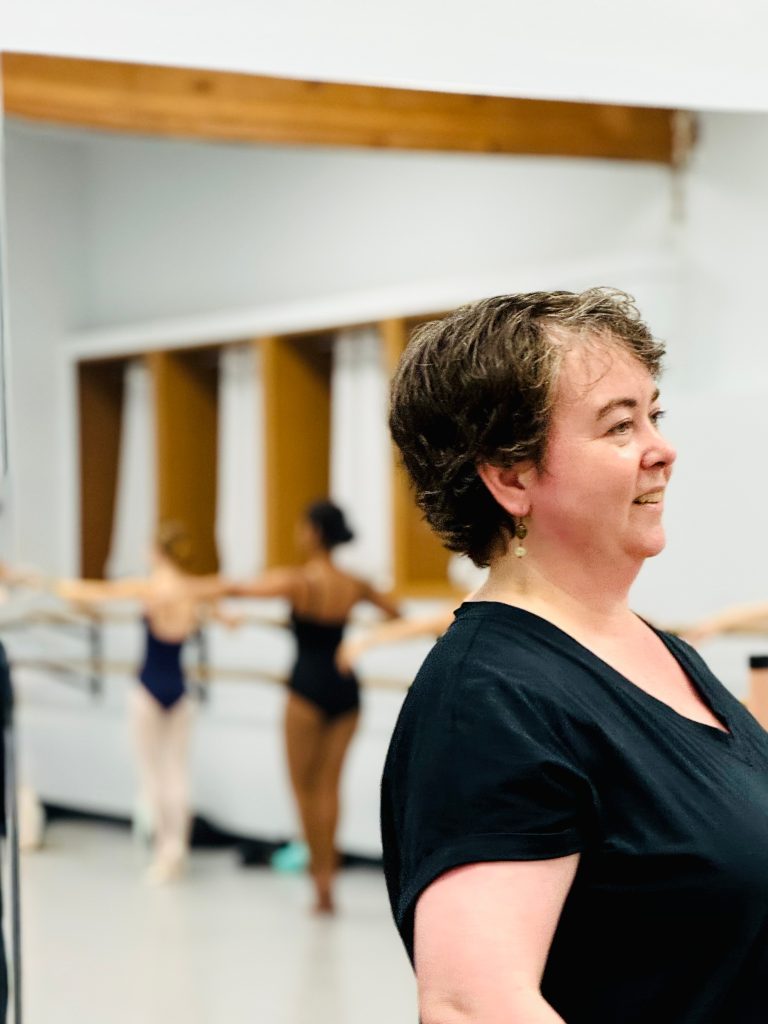
From the start of my teaching career, there has always been a theme around finding a balance between respect for one’s body and its individuality, while fulfilling the demands and rigors of classical ballet. Every body is unique. Each hip socket, every vertebrae, every bone of every foot is uniquely made, not just from birth, but through lived experience. To expect all dancers’ bodies to behave in the same way is not only unrealistic, but it also takes away from the beauty of every dancer’s individual body.
To expect all dancers' bodies to behave in the same way is not only unrealistic, but it also takes away from the beauty of every dancer's individual body.
The study of ballet is a demanding thing, and it requires a great amount of rigor. I use rigor in the academic sense, that we do not just need hard work for the body, but we need to develop the ability to think critically and creatively, to be flexible not only in our bodies, but also in our minds. We are not just teaching a body to do a trick, but helping to create a path for the individual dancer to discover what is held within themselves.
I find that more often than not, if a student is struggling with an aspect of technique, what they need most is to slow down and listen to their own body. The answer is usually there within themselves. The teacher is just there to facilitate that moment of finding.
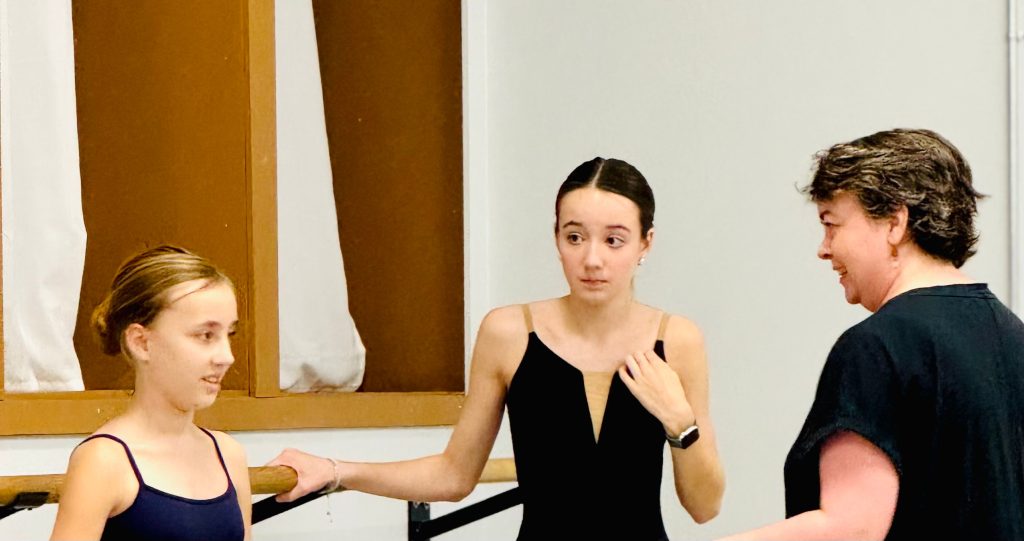
The last several years I have become more focused on the need to foster community not only within a dance program, but within each individual classroom that I teach in.
There is a general thought out there, that community is important to help foster creativity and motivation. I feel that this is something that I have observed in my own students, that during the hard patches, they are able to lean on their community and find help there, because they are invested in each other, not just themselves. Communities help us learn to be responsible for our own selves, as well as to each other. Communities help us learn how to cope with fears, how to grow our ideas, how to let go of ego, and how to be leaders. Community helps us to learn to be responsible for our own learning, as well as being responsible to the group for our own actions. Community inspires us, every individual dancer in that community inspires every other individual dancer in some way. The more you are willing to be a part of the community, the more it gives back. There is something about that synergy that inspires a love for the work, the art form, and each other.
The most memorable moments of my teaching career involve moments of observing the dancer come to a moment, where they make a transformation within themselves, not because of what I or another teacher told them to do, but because they learned to listen to their own bodies and minds. So often those moments were in the classroom, and the only people who saw were the members of the classroom community, and because they were invested in each other, they celebrated each other, no matter how subtle the shift was.
What I would hope for students to take away from all of my classes, is that they come away with a deeper relationship to both their body and their community. The only thing I truly ask from dancers in my classrooms is that they treat themselves, each other, and the process with respect. If that happens, then the possibilities for those deep relationships will open up.